
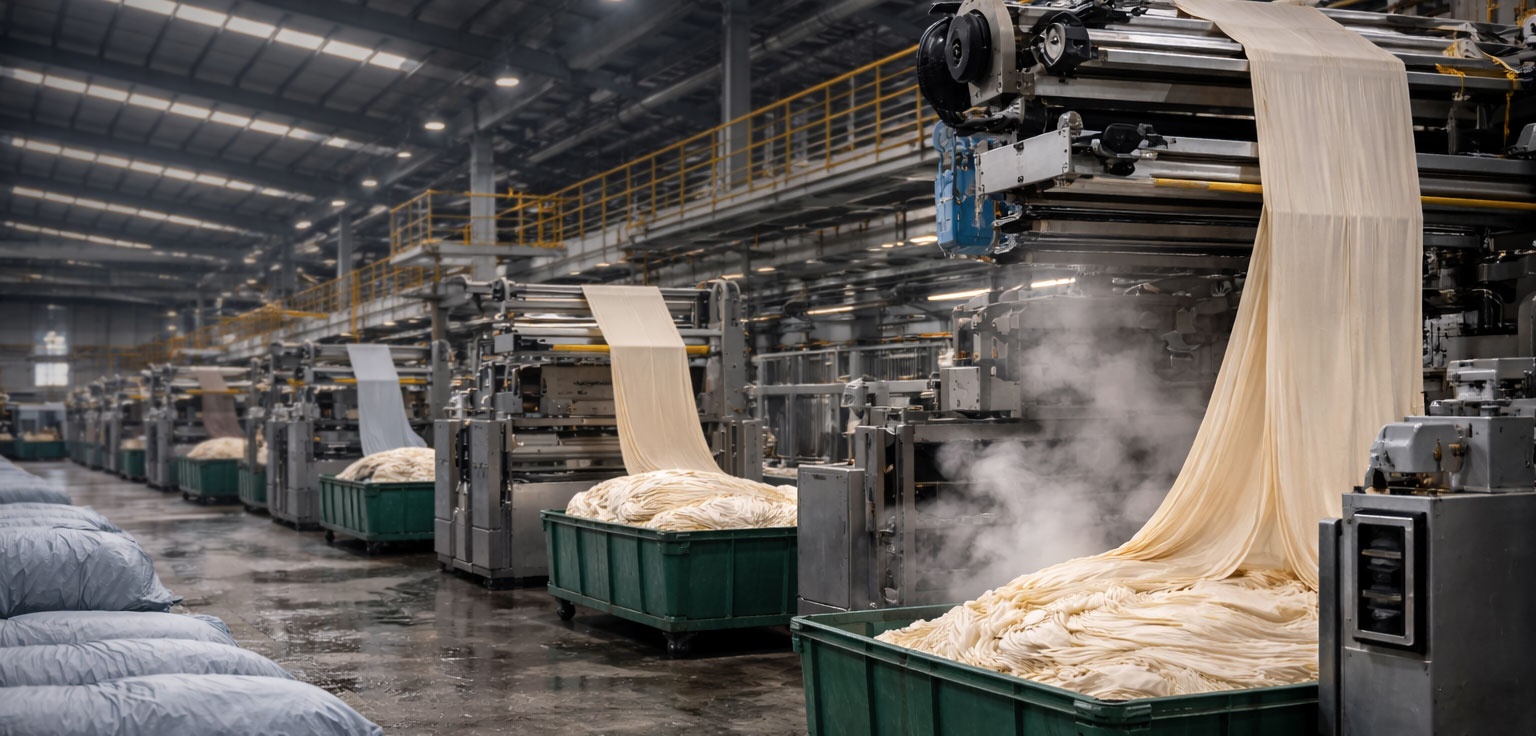
Fabric Capability Depends on What Can Be Controlled
We focus on the variables that determine whether a fabric can be reproduced reliably in bulk.
Consistency is not inspected at the end. It is built through controlled decisions.
What We Control — Not Just What We Offer
Fabric capability is not about offering more options.
It is about controlling the variables that determine whether a fabric can perform consistently in real production.
We focus on four key areas where early decisions have the greatest impact on bulk reproducibility.
Fabric Construction
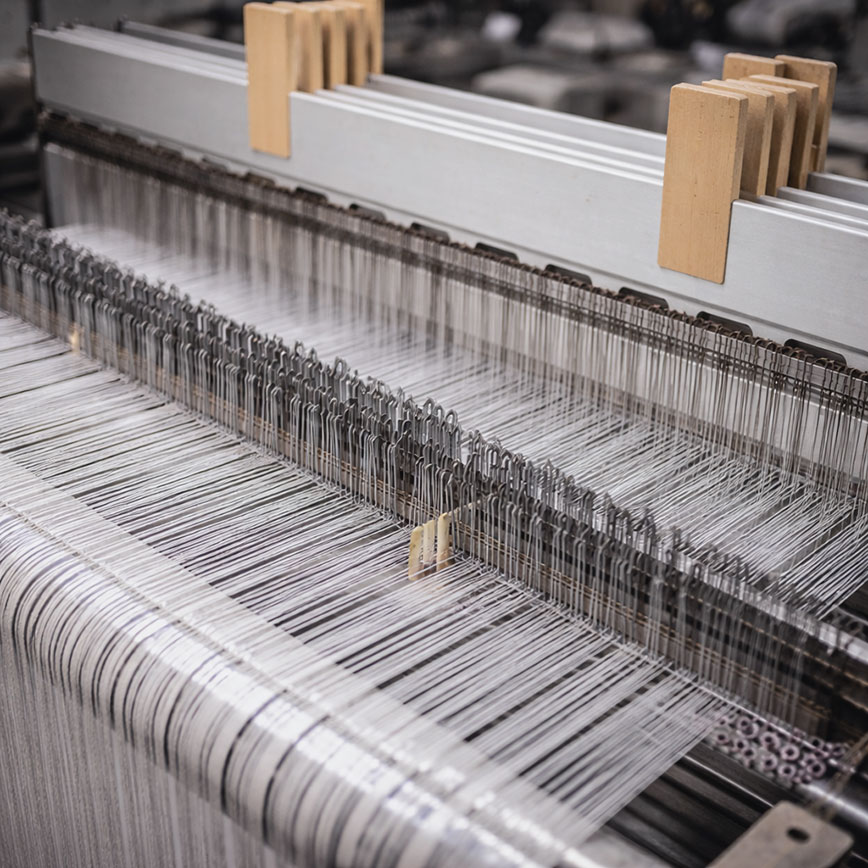
Fabric construction is where production feasibility begins.
We evaluate how yarn count, density, structure, and machine compatibility affect whether a fabric can be reproduced consistently in bulk.
This includes how we assess:
- Yarn count and density alignment
- Structure suitability for woven, knitted, or denim fabrics
- GSM control within production tolerance
- Construction stability under real mill conditions
This is not only about how the fabric looks in sampling, but whether the structure can hold up in production.
Color & Dyeing
Color consistency depends on more than shade approval.
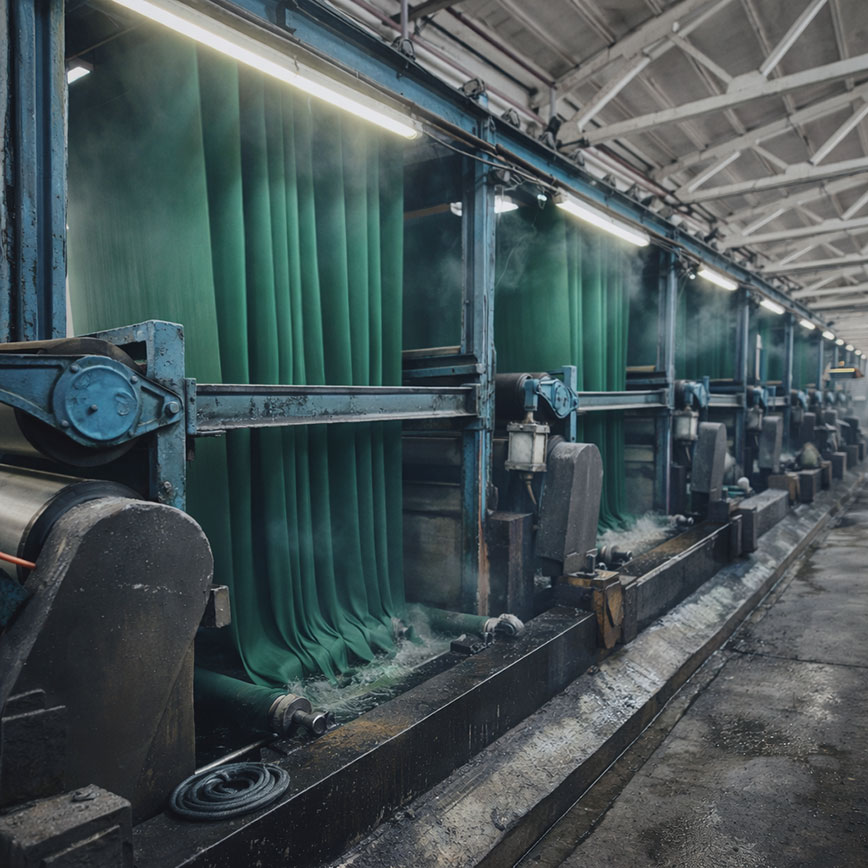
We evaluate whether color can be developed and maintained under real dyeing conditions, across batches and production cycles.
This includes how we assess:
- Lab dip alignment with bulk expectations
- Dyeing route suitability for the fabric type
- Colorfastness and shade stability in use
- Risks that may affect repeatability in bulk dyeing
The goal is not just to match color once, but to reduce variation in actual production.
Finishing & Performance
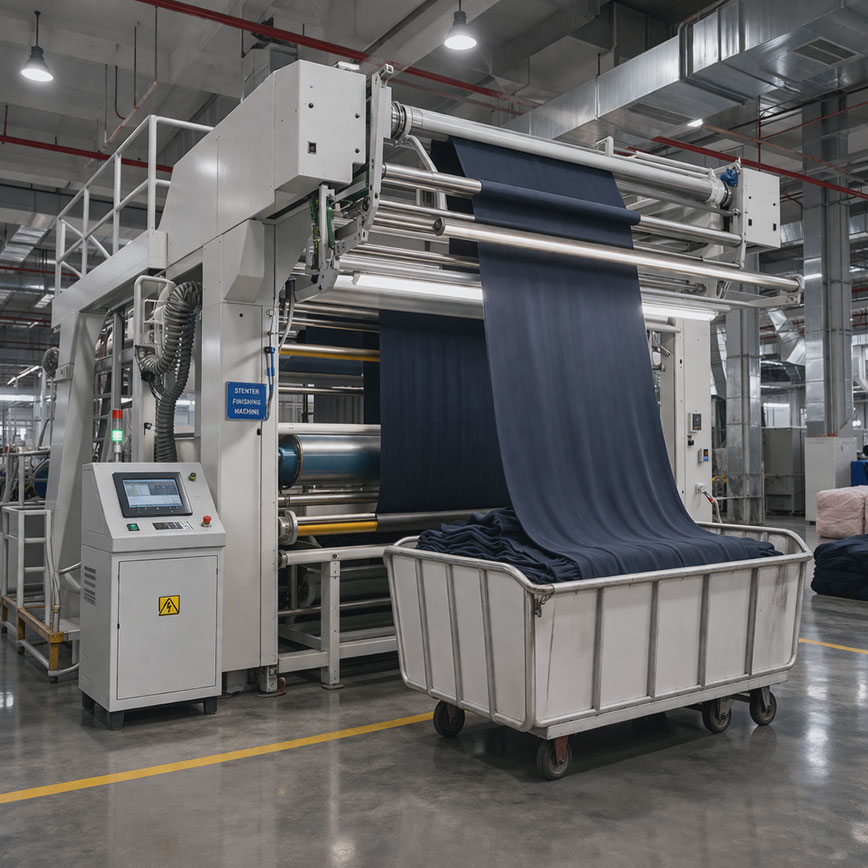
Finishing decisions affect both appearance and production stability.
We define finish direction based on garment use, fabric behavior, and how the material will perform after processing.
This includes how we assess:
- Handfeel consistency and finish direction
- Shrinkage risk after washing or processing
- Functional finish suitability where required
- Balance between appearance, performance, and production practicality
We do not look at finishing only as a surface effect, but as part of how the fabric performs in bulk.
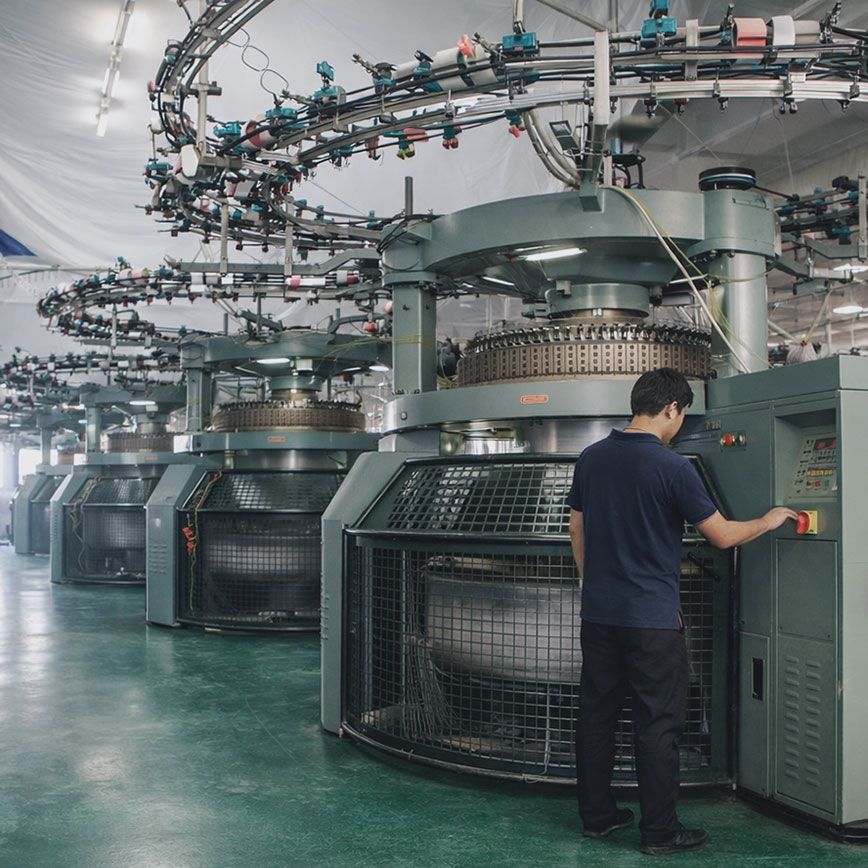
Bulk Production Stability
A workable fabric must remain stable beyond one sample round.
We evaluate whether the material can move from development into repeatable production with controlled variation.
This includes how we assess:
- Repeatability across multiple batches or orders
- Production risk during scaling and bulk execution
- Match between approved sample and bulk outcome
- Stability across real production cycles and delivery runs
This is where fabric capability becomes real — when the fabric can be reproduced reliably, not just approved once.
See how these controls continue in production → [Quality Control]
How Fabric Consistency Is Built — Not Inspected
Fabric consistency is not controlled at a single inspection point.
It is built through a series of decisions made before and during production.
Most issues in bulk production do not come from defects —
they come from misalignment between development, sampling, and manufacturing.
To reduce variation, control must happen across multiple stages — not only at the end.
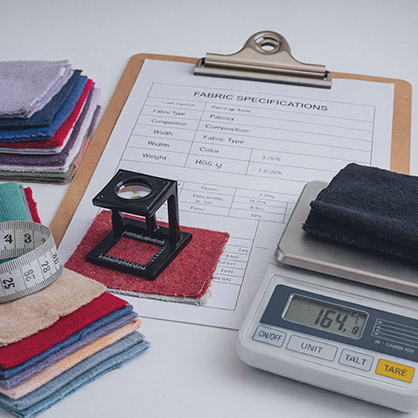
Decision Stage
We define material direction, structure, and feasibility before development begins.
This stage focuses on:
- Selecting fiber compositions based on cost, performance, and availability
- Defining fabric structures aligned with machine capability
- Evaluating whether a design concept can be produced consistently in mills
Decisions made here determine whether a fabric will be stable in bulk production — or require constant adjustment later.
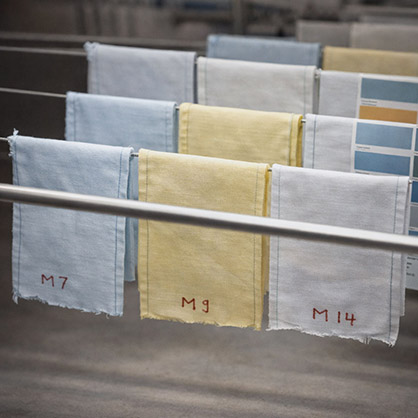
Alignment Stage
Before bulk production begins, all variables must be aligned and confirmed.
This includes:
- Sampling and lab dip approval under controlled conditions
- Specification confirmation for GSM, structure, and finishing
- Matching color and handfeel against production realities
Without proper alignment, variation between sample and bulk becomes unavoidable.
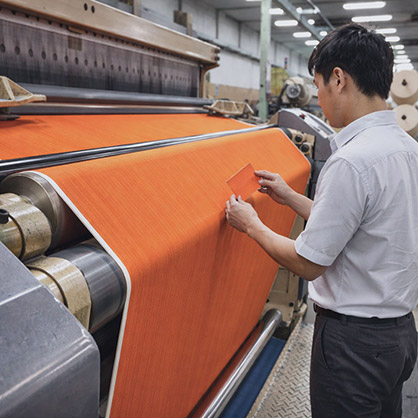
Execution Stage
During production, control shifts from definition to monitoring and consistency.
We focus on:
- Tracking production against approved standards
- Monitoring batch-to-batch variation
- Identifying and correcting deviations early
Control at this stage is not final inspection —
it is continuous management during production.
How Deep the Control Goes
We do not only define and align fabrics —
we control how variables behave under real production conditions.
Control Before Production
We define key variables early — including structure, composition, and finishing — based on real manufacturing constraints.
→ Not after issues appear
Control Across Stages
We ensure decisions made during development are maintained through sampling and bulk production.
→ Not lost between stages
Control Under Real Conditions
We evaluate fabrics under actual dyeing, finishing, and garment use scenarios.
→ Not only under sample conditions
What This Means in Real Production
- Reduced variation between batches
- Stable color consistency across orders
- Predictable fabric performance after processing
- Fewer delays caused by rework or misalignment
This is what fabric capability means in real manufacturing — not just in sampling.
Start with Your Fabric Requirement
Share your fabric specs, sample references, or development needs.
We will respond with practical fabric options and production considerations.