
Quality Is Controlled During Production — Not After
Fabric quality control in production ensures approved sample standards are carried into bulk — not just checked at the end.
We control key production stages to maintain consistency between sample and bulk.
What We Actually Control in Production
Quality control is not a final inspection.
It is the process of controlling variables before and during production to ensure consistency.
Fabric Construction Control
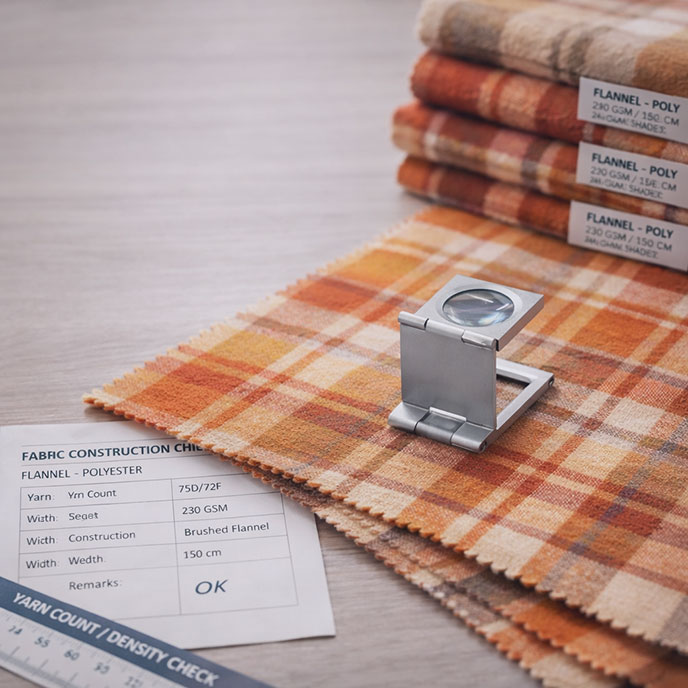
We verify construction before bulk production to avoid structural variation.
- Check yarn count and density against approved specs
- Confirm weave / knit structure consistency
- Monitor GSM tolerance before and during production
Color Control
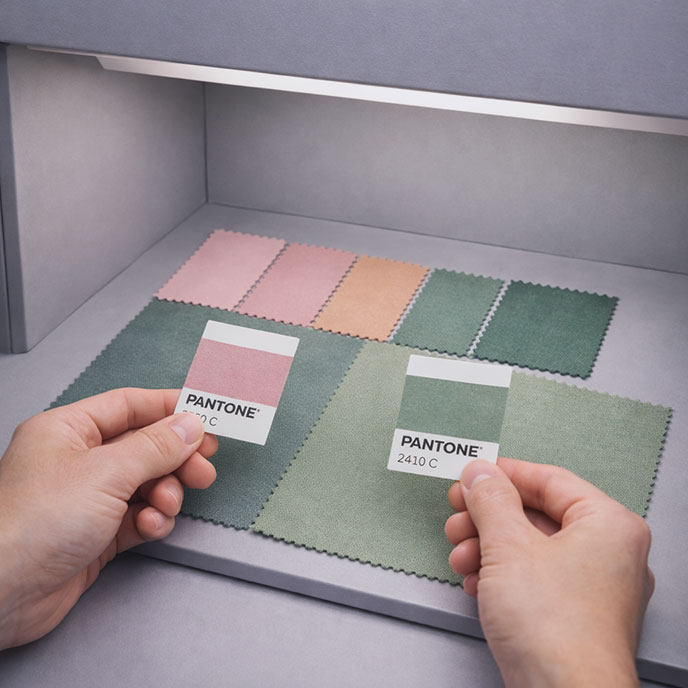
We control color alignment from lab dips to bulk.
- Approve lab dips under standard conditions
- Compare bulk fabric against approved standards
- Monitor shade variation across batches
Finishing Control
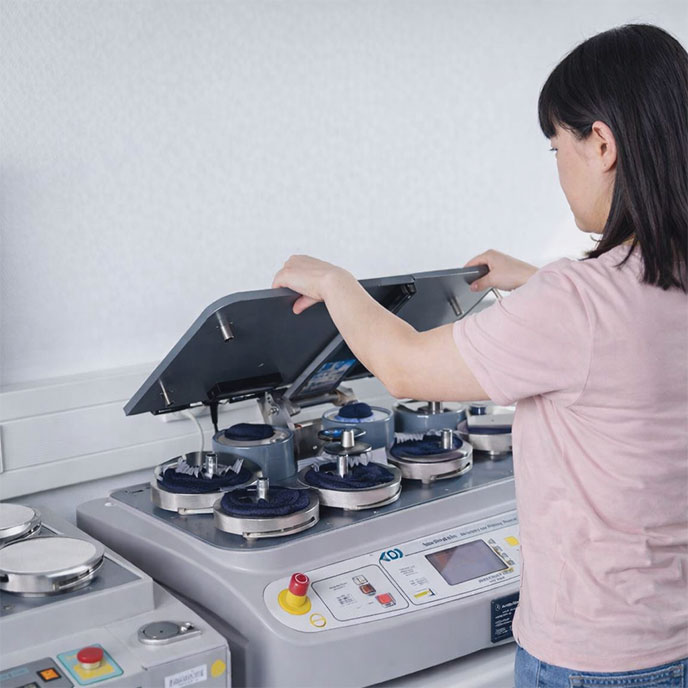
We ensure finishing processes match production requirements.
- Test shrinkage before bulk production
- Evaluate hand feel consistency
- Confirm finishing performance based on application
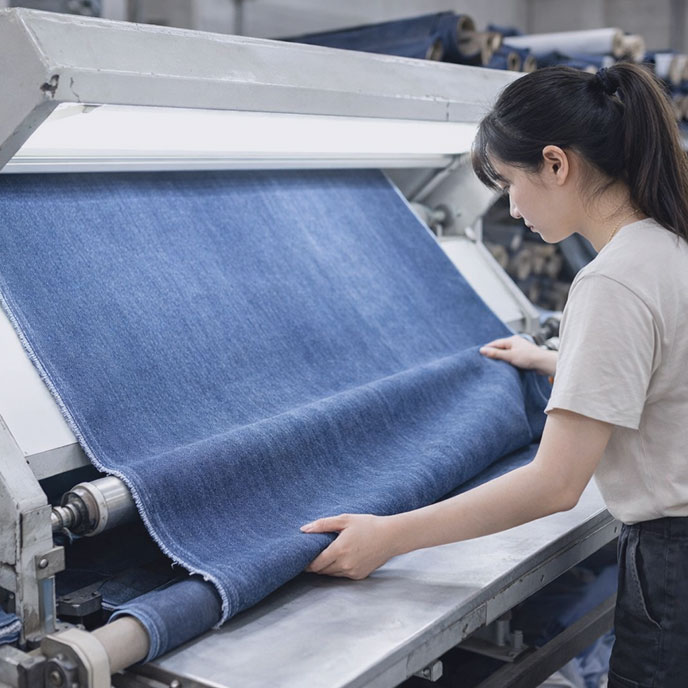
Bulk Production Control
We monitor production to reduce variation.
- Compare bulk fabric with approved samples
- Track variation across production batches
- Follow up during production and before shipment
Where Quality Is Checked
Quality is controlled across multiple stages — not only at the end.

Pre-Production Check
Confirm fabric construction, specifications, and lab dip approval before production starts.

In-Line Production Check
Monitor fabric during production, checking color consistency, construction stability, and finishing alignment.

Final Fabric Check
Inspect finished fabric against approved samples, including color, construction, and basic performance.
Before Shipment
Before shipment, we verify that bulk production fully matches approved standards — not only in fabric, but also in labeling, packing, and shipment details.
Fabric Confirmation
Bulk fabric is checked against approved samples for color, construction, and finishing consistency.
Quantity & Packing
Roll length, total quantity, and packing method are verified to match order requirements.
Label & Identification
All labels, markings, and references are checked to ensure correct identification and traceability.
Shipment Readiness
Final inspection confirms that goods are properly packed, documented, and ready for shipment.
Reporting & Communication
We provide clear QC feedback during production, including:
We help ensure:
- Production updates and issue tracking
- Visual records and inspection notes
- Communication of risks and corrective actions
Clear sampling reduces uncertainty and avoids costly mistakes in production.
Inspection Criteria
Quality standards are defined based on fabric type, end use, and production requirements — not applied as a generic checklist.
Different fabrics require different control points.
Inspection criteria are aligned with fabric construction, color expectations, finishing requirements, and the practical conditions of production and shipment.
We define quality standards based on factors such as:
- Fabric category and construction type
- Approved sample and confirmed specifications
- Color tolerance and shade consistency requirements
- Finishing expectations and end-use performance
- Packaging, labeling, and shipment conditions where relevant
This helps ensure that inspection is based on the actual fabric and order requirements — not on fixed assumptions.
Clear criteria reduce ambiguity, improve communication, and help maintain consistency from sampling to bulk delivery.
Discuss Your Fabric Requirements
If you have specific quality expectations, we can align them during sampling and production.